Type 1, edging and fabric for a patio base
A patio in a Burham garden is usually a flat square laid on ground that was lawn, and most of the work is out of sight. The slabs go on top, but the stone under them, the fabric beneath the stone and the edging round the outside decide whether the patio stays level for years. This guide sets out the base for a patio of 4 by 3 metres and works it into one order. The slabs themselves are chosen on the shop.
Rochester BM is the Rochester and Borstal delivery site of Discount Builders Merchants (KENT) LTD, the builders' merchant at Lower Road, Northfleet, DA11 9BB. There is one yard, and orders are placed on www.discountbm.co.uk.

Setting out and digging
Set the patio out with a line and pegs, then check both diagonals, because equal diagonals give a true rectangle. Strip the turf and the top soil, then dig down to the depth of the base. On ground that was a firm lawn, that is the depth of the stone plus the bedding under the slabs, with a little more for the fall.
Check the fall before the stone goes in. A patio should drop away from the house by about one in eighty, so that rain runs off the slabs and not back against the wall. Mark the finished level on the wall of the house and work every peg up to it.
Fabric on soft ground
Where the soil is soft, or the garden has been filled over an old bed, lay a geotextile fabric in the bottom of the dig before any stone goes in. It stops fine soil working up into the stone and keeps the base from sinking unevenly under the weight of the slabs. Lap the sheet at least 300 mm where two pieces meet, and turn it up the sides of the dig.
A single sheet of this size covers a patio of 12 square metres with room to turn up the edges. Cut it to size on the lawn and lay it flat without folds, because a fold lifts the stone above it and leaves a hump in the finished surface.
Type 1 sub-base, compacted
Type 1 is crushed stone that locks when it is rammed. Lay it in layers no thicker than about 100 mm, and ram or roll each one until it stops moving under the feet. A sub-base of 100 mm once compacted carries a patio used on foot and garden furniture without trouble.
Roughly five square metres of compacted 100 mm sub-base take a tonne. For a patio of 12 square metres that is about 2.4 tonnes, which is exactly three of the 0.8 tonne bags. With no spare in the count, order one more bag if the dig turns out deeper than planned.
Edging and the haunch
Edging holds the outside of the slabs in place and stops the stone spreading onto the lawn. Set a flat edging with its top just below the finished level, and bed it on a haunch of concrete along its outside. The haunch is what stops the edge being pushed out when the slabs are walked on or a wheelbarrow runs across them.
The edge of a 4 by 3 metre patio is 14 metres. Each flat top edging of 914 mm covers 0.914 metres of it, so the count is the whole perimeter divided by 0.914, rounded up. The haunch runs about 150 mm wide and 100 mm deep along the outside of the edging, and its mix is five measures of ballast to each measure of cement.
Keeping the base sound
Lay the slabs as soon as the base is firm, so that rain does not sit on bare stone and soften it. Rake the stone level after each layer and before the bedding goes on, so every slab sits on the same plane. A slab that rocks is almost always sitting over a dip in the stone below it.
Store the cement and the ballast for the haunch under cover, and use the oldest bag first. A bag that has stood in damp air sets hard in its corners, and a hard bag in the haunch is hard to spot before the concrete has been poured.
Rules of thumb
| Sub-base | Roughly five square metres of 100 mm type 1 to the tonne, compacted. Each bag holds about 0.8 tonnes. |
|---|---|
| Fabric | One sheet of 4.5 by 11.1 metres covers about 50 square metres, enough for a patio with turn-ups. |
| Edging | Perimeter in metres, divided by 0.914 and rounded up, for flat top edging of 914 mm. |
| Haunch | Length of the edging, times 0.15 m wide and 0.1 m deep, gives cubic metres. Mix it at 1:5, which takes roughly 13 bags of cement per cubic metre. |
| Slabs | Not in this order. Measure the area and allow a tenth for cuts before choosing the slabs and the bedding sand. |
The shop has calculators that turn a measurement into a quantity.
On the shop today
The products this guide talks about, from the shop's Garden & Landscaping aisle. Prices last checked .
-
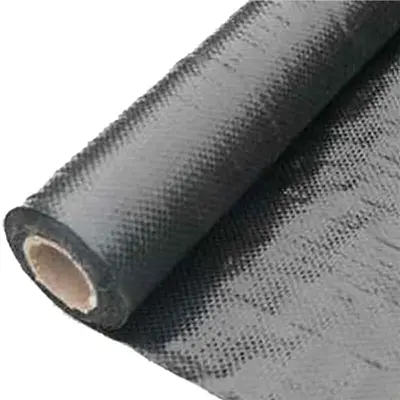 4.5m x 100m Geotextile Woven (black)
each
£180.00 inc VAT
£150.00 ex VAT
In the yard
-
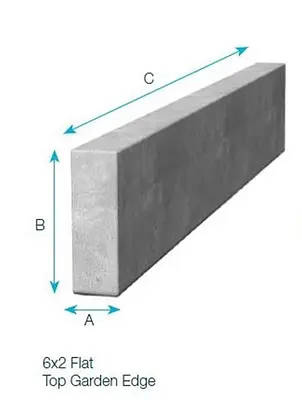 Flat Top Edging 150x50x914mm
each
£5.06 inc VAT
£4.22 ex VAT
In the yard
-
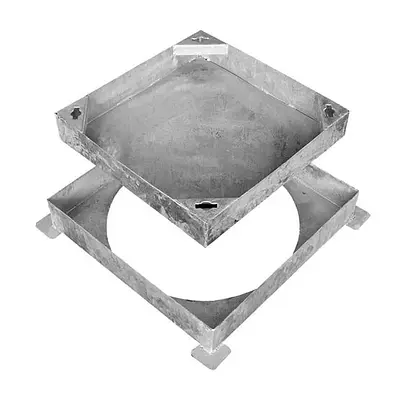 450x450mm 80mm Recessed MC&F Block Paving Sqr Rnd CD450SR
each
£70.20 inc VAT
£58.50 ex VAT
In the yard
-
 Ekotex 06 4.5m x 100m Geotextile Non Woven (white)
each
£240.00 inc VAT
£200.00 ex VAT
In the yard
-
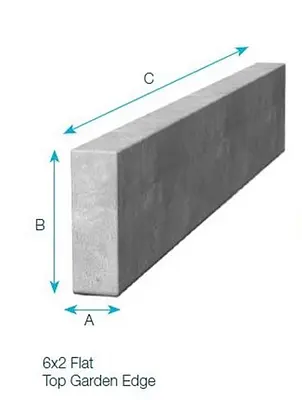 Flat Top Edging 200x50x914mm
each
£7.74 inc VAT
£6.45 ex VAT
In the yard
-
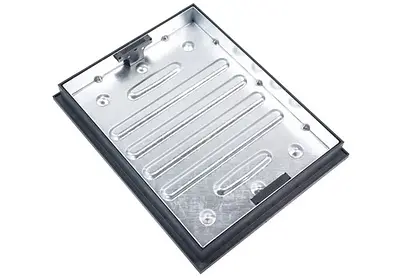 600x450x65mm Recessed Tray (block paving tray) CD790R/30
each
£60.00 inc VAT
£50.00 ex VAT
In the yard
-
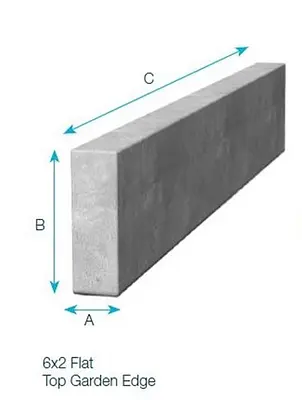 Flat Top Edging 255x50x914mm
each
£10.79 inc VAT
£8.99 ex VAT
In the yard
-
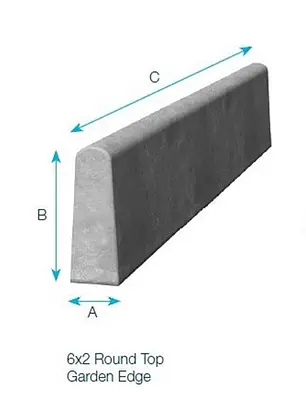 Round Top Edging 150x50x914mm
each
£8.70 inc VAT
£7.25 ex VAT
In the yard
Prices are the shop's prices today. Stock and ordering are on www.discountbm.co.uk.
See all Garden & Landscaping on the shop
Delivery to Rochester and Borstal
- ME1
-
Free when the goods reach £41.66 ex VAT (£49.99 inc VAT).
A smaller order pays the difference up to that amount: goods of £25.00 ex VAT (£30.00 inc VAT) pay £16.66 ex VAT (£19.99 inc VAT) for delivery.
More guides for Rochester and Borstal
- A yellow stock garden wall for ME1 A one-brick front wall of yellow stock for a Rochester terrace, with its footing, mortar and one worked order priced for the ME1 district.
- A single-leaf block store on a strip footing Blockwork for a garden store in Wouldham or Burham, built as one leaf on a strip footing, with a door opening and a worked order for ME1.
- A concrete hardstanding for a Borstal drive Sub-base, concrete and cement for a 5 by 3 metre car standing on a Borstal plot, with the mixing, the fall and one worked order for ME1.