A single-leaf block store on a strip footing
A garden store in the villages up the Medway is usually built the simple way: one leaf of block on a strip footing, with a door in one end and a light timber roof on top. The plots round Wouldham and Burham are long enough to take one, and block goes up faster than brick. This guide works a store of about 2.6 by 2 metres through to one order, counted wall by wall.
Rochester BM is the Rochester and Borstal delivery site of Discount Builders Merchants (KENT) LTD, the builders' merchant at Lower Road, Northfleet, DA11 9BB. There is one yard, and orders are placed on www.discountbm.co.uk.

Deciding whether one leaf will do
One leaf of block is enough for a store that holds tools, bicycles and a mower, provided the roof is light and the outside of the wall is kept dry. It is not a substitute for an extension, which carries a floor and the weight of the house above. A store built to take a heavier roof needs a design from someone qualified before the first block is laid.
Check the boundary before the footing is dug. A store set close to a neighbour's wall or a public path may need a permission, and that answer comes from the council, not from the order.
The strip footing
The footing is a strip of concrete under the whole perimeter, wider than the wall it carries. Dig the trench down to firm ground, and where the soil is soft or has been filled, go deeper until the bottom is undisturbed. A width of about 0.45 m and a depth of 0.2 m is common for a store this size, but the real figures come from the ground and the design.
The concrete is one part cement to five of ballast by volume. Measure the trench in metres, multiply length by width by depth, and the cubic metres give the ballast and the bags. Pour it level, and leave the top rough so the first course has a key to bed into.
Laying the blocks
Standard blocks of 440 by 215 mm take about ten to the square metre of wall, so the count starts from the area of the walls in square metres. Count the walls gross first, then take the door out. Dense block suits the lower courses and any part of the wall that sits near damp ground, and a standard block of stated strength is the usual choice above.
Lay the first course dry on the footing and check it for level and square before any mortar goes down. Build the corners first and bring each one up to the same height, then fill the middle, so that every course runs true along a string line.
Mortar and the bag of sand
The mortar is one part cement to five of sand by volume. A store this size is served by one bulk bag of building sand, which covers the joints with a little spare for patching. The cement follows the sand at seven bags for each tonne, and the footing's cement is added to it on the same order, so one delivery covers the whole job.
Keep the bags closed and off the ground, and mix only as much mortar as one course will take before it begins to stiffen. In dry weather, dampen the blocks before they are bedded, so that they do not draw the water out of the mortar too quickly.
The door and the roof
A door opening is taken out of the count, not added to it. Work out the full wall area first, then take away the width of the door multiplied by its height. A lintel goes over the opening, sized from the drawings, and it bears on the block at each side by the amount the design sets, so the load is spread into the wall.
Ask about the roof before the wall is finished. The wall plate is fixed into the top course as the blocks go up, and a roof left to be fixed to a finished wall is harder to tie down. Plan the plate fixings at the start, with the designer, so the top of the wall is built ready for them.
Rules of thumb
| Wall area | Each wall's length times its height, added together, gives the gross face in square metres. Take each opening away afterwards. |
|---|---|
| Blocks | Roughly ten to the square metre at 440 by 215 mm, then a tenth added for cuts round the corners and the door. |
| Footing | Trench length times width times depth gives cubic metres. Ballast is counted at roughly 1.9 tonnes a cubic metre, and cement at about 13 bags. |
| Mortar sand | One bulk bag of building sand for a store of this size, with seven bags of cement for each tonne of sand. |
| Lintel | Sized from the drawings, with a set bearing on the block at each end of the opening. |
The shop has calculators that turn a measurement into a quantity.
Worked order: A 2.6 by 2 metre block store in Wouldham, one leaf with its footing
| Product | Quantity | What it is for | Cost |
|---|---|---|---|
| 100mm Linlite Durox 440 Standard Block 3.6N | 195 at £1.55 | Two walls of 2.6 m and two of 2.0 m make 9.2 m of run. At 2.1 m high that is 19.3 square metres, and the 0.8 m by 2 m door comes off to leave 17.7. At about ten blocks a square metre that is 177, and a tenth for cuts and the corners makes 195. | £302.25 |
| Bulk Bag Ballast 20mm | 2 at £40.00 | The footing is 9.2 m long, 0.45 m across and 0.2 m deep: 0.83 cubic metres. Ballast at roughly 1.9 tonnes per cubic metre gives 1.57 tonnes, more than one bag, so two. | £80.00 |
| Bulk Bag Soft Building Sand Nepicar | 1 at £45.83 | The mortar for a store of this size is taken as one bulk bag of building sand, about 0.8 tonnes, which covers the joints with a little to spare. | £45.83 |
| 25kg Mastercrete Cement (plastic) | 17 at £7.99 | Footing cement at 13 bags a cubic metre comes to 10.8 for 0.83 cubic metres, rounded up to 11. The sand's 0.8 tonnes takes seven bags a tonne, so 5.6, rounded up to 6. Together 17. | £135.83 |
| Goods | £563.91 | ||
| Delivery to ME1 | £0.00 | ||
| Delivered total ex VAT | £563.91 | ||
| Delivered total inc VAT | £676.69 | ||
Bulk bags: the bags in this order are counted at about 0.8 tonnes each. That is a planning figure. The shop does not publish a weight for a bulk bag, so confirm the number of bags with the yard before ordering.
Not in this order: The lintel over the door, the roof timber and its fixings, the damp proof course, any render or paint on the outside, and the door itself.
The quantities are a starting point for a job of this size. Put the same goods in a basket on www.discountbm.co.uk with your own postcode to see the figure for your order, or send the yard your list.
On the shop today
The products this guide talks about, from the shop's Blocks aisle. Prices last checked .
-
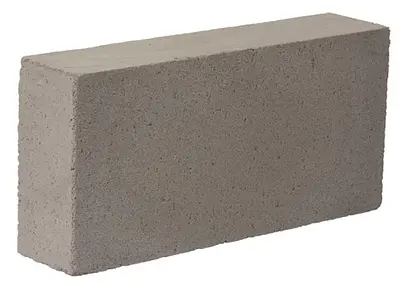 100mm Standard Block 3.6N
m²
£2.10 inc VAT
£1.75 ex VAT
In the yard
-
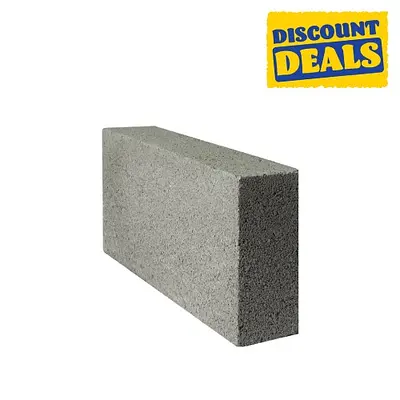 100mm Dense Concrete Block 7N (66Void)
m²
£1.50 inc VAT
£1.25 ex VAT
In the yard
-
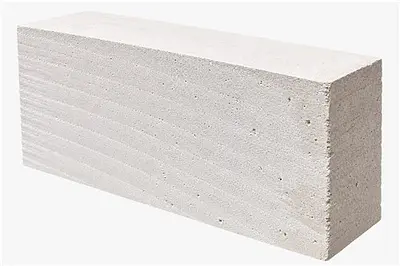 100mm Linlite Durox 440 Standard Block 3.6N
each
£1.86 inc VAT
£1.55 ex VAT
In the yard
-
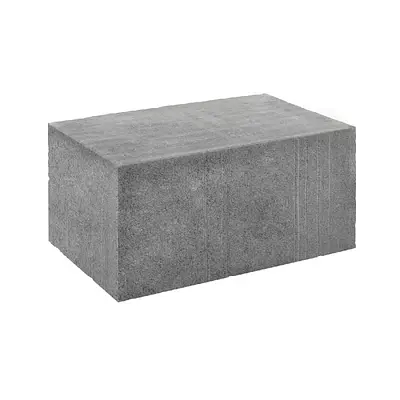 215mm Standard Block 3.6N
m²
£5.04 inc VAT
£4.20 ex VAT
In the yard
-
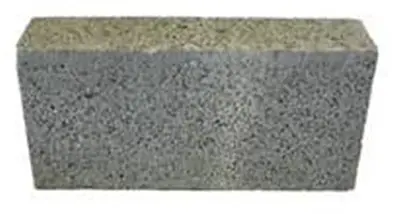 100mm Medium Dense Block 7N (Void pk 84)
m²
£1.86 inc VAT
£1.55 ex VAT
In the yard
-
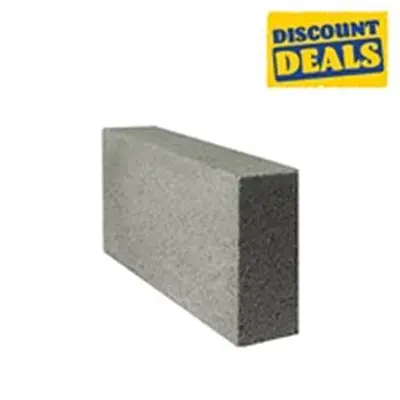 100mm Toplite Standard Block 3.6N
m²
£2.00 inc VAT
£1.67 ex VAT
In the yard
-
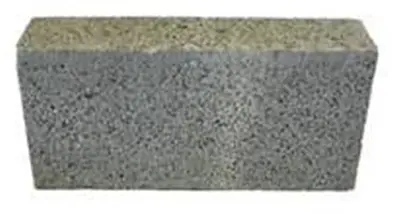 140mm Dense Concrete Block 7N
m²
£2.75 inc VAT
£2.29 ex VAT
In the yard
Prices are the shop's prices today. Stock and ordering are on www.discountbm.co.uk.
Blocks for garden stores and extension walls See all Blocks on the shop
Delivery to Rochester and Borstal
- ME1
-
Free when the goods reach £41.66 ex VAT (£49.99 inc VAT).
A smaller order pays the difference up to that amount: goods of £25.00 ex VAT (£30.00 inc VAT) pay £16.66 ex VAT (£19.99 inc VAT) for delivery.
More guides for Rochester and Borstal
- A yellow stock garden wall for ME1 A one-brick front wall of yellow stock for a Rochester terrace, with its footing, mortar and one worked order priced for the ME1 district.
- Type 1, edging and fabric for a patio base Sub-base, fabric, edging and haunch for a 4 by 3 metre patio in a Burham garden, with a worked ME1 order. The slabs are not in the order.
- A concrete hardstanding for a Borstal drive Sub-base, concrete and cement for a 5 by 3 metre car standing on a Borstal plot, with the mixing, the fall and one worked order for ME1.